Cardamom Market Analysis: Guatemala Supply Shock Reshapes Trade, India Gains Pricing Power
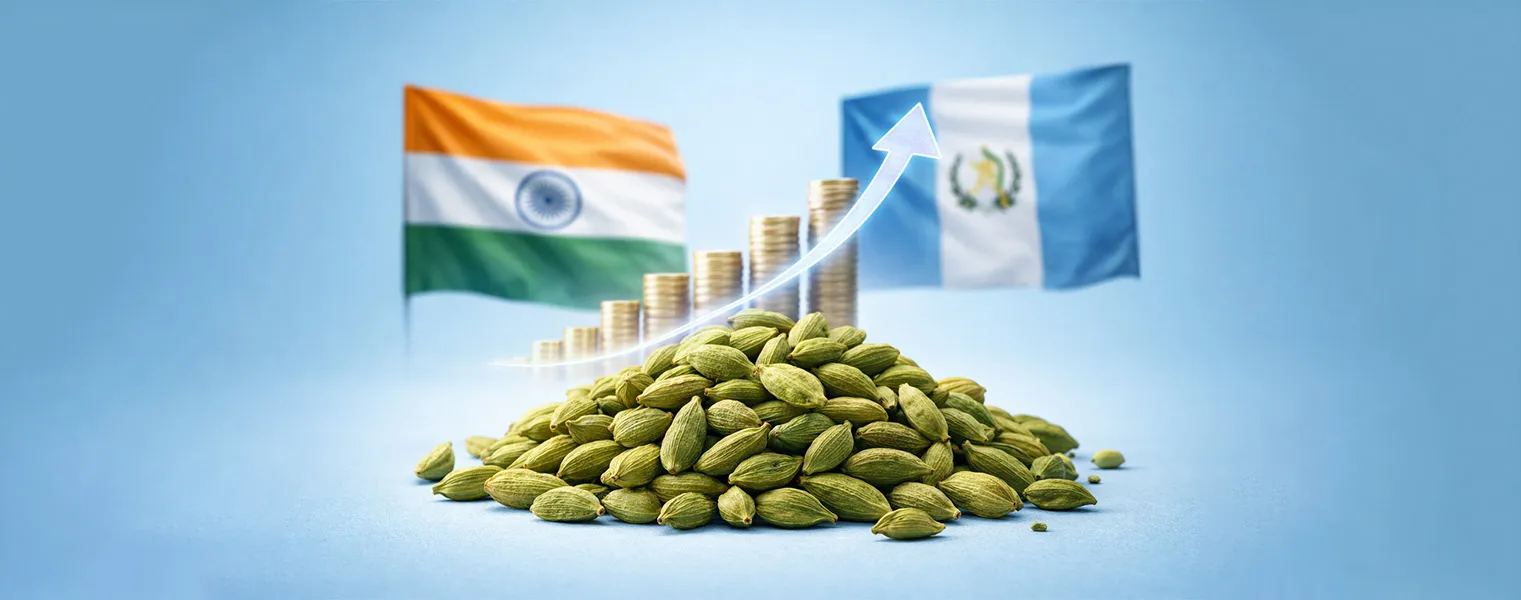
The global cardamom market is entering a decisive phase as severe crop damage in Guatemala, the dominant supplier to international markets, has disrupted traditional supply flows. This shock is already altering trade dynamics, redirecting demand toward India and tightening availability across key consuming regions.
Guatemala: The Trigger Behind the Rally
Guatemala’s cardamom sector has suffered significant crop losses, sharply reducing exportable supply at a time when global demand is seasonally strengthening. As the world’s largest producer, any disruption in Guatemala has an outsized impact on prices and buyer behavior.
With volumes constrained, international buyers—particularly from the Gulf and Middle East—have accelerated procurement to secure coverage ahead of Ramadan, a peak consumption period for cardamom. This has triggered a wave of forward buying, immediately lifting sentiment and price expectations.
India: Export Powerhouse in the Making
India is emerging as the primary alternative supplier in this deficit-driven environment. Market participants now expect Indian exports to reach 12,000–14,000 tonnes during the current season, with optimistic projections of up to 22,000 tonnes by March 2026 if supply conditions remain manageable.
Domestic prices reflect this tightening balance:
-
Average prices hover around ₹2,520/kg
-
Premium varieties are firming faster as export competition intensifies
-
Global wholesale expectations for top grades are now trending toward ₹6,000–₹8,000/kg, an unprecedented level if momentum continues
Strong overseas demand is giving Indian sellers greater negotiating leverage, especially for high-quality lots.
Market Structure: Tight Supply, Selective Buying
Despite bullish headlines, the market is not disorderly:
-
Arrivals remain controlled, not excessive
-
Stockists and exporters are active but selective
-
Buyers are prioritizing quality and export suitability
This has created a two-speed market: premium grades rallying faster, while lower qualities move more gradually.
Risks to Watch: Weather & Regulation
While fundamentals are supportive, risks remain:
-
Weather uncertainty and pest incidence in India could limit exportable surplus
-
Regulatory tightening, highlighted by the cancellation of a dealer license by the Spices Board, underscores increasing scrutiny over compliance and market integrity
-
Any sharp rise in arrivals could temporarily cool momentum, though this currently appears unlikely
Demand Side: Ramadan & Middle East Lead
Export demand remains the dominant force:
-
Middle Eastern buyers are front-loading purchases
-
Ramadan consumption patterns amplify urgency
-
Limited alternative origins mean buyers have few substitutes
This demand structure significantly reduces downside risk in the near term.
Market Psychology: From Stable to Bullish
Earlier in December, cardamom markets were described as “firm but restrained.” The Guatemala supply shock has now shifted sentiment decisively upward, turning stability into momentum.
Traders who previously adopted hand-to-mouth strategies are now reassessing coverage, particularly for export-grade material.
Final Price Outlook
 Short to medium term: UP
Reason:
-
Sharp supply contraction in Guatemala
-
Strong pre-Ramadan buying from Middle East
-
India gaining export dominance
-
Limited global alternatives
Risk scenario:
Only a sudden surge in Indian arrivals or demand destruction could cap prices—but current indicators point toward continued firmness and further upside.